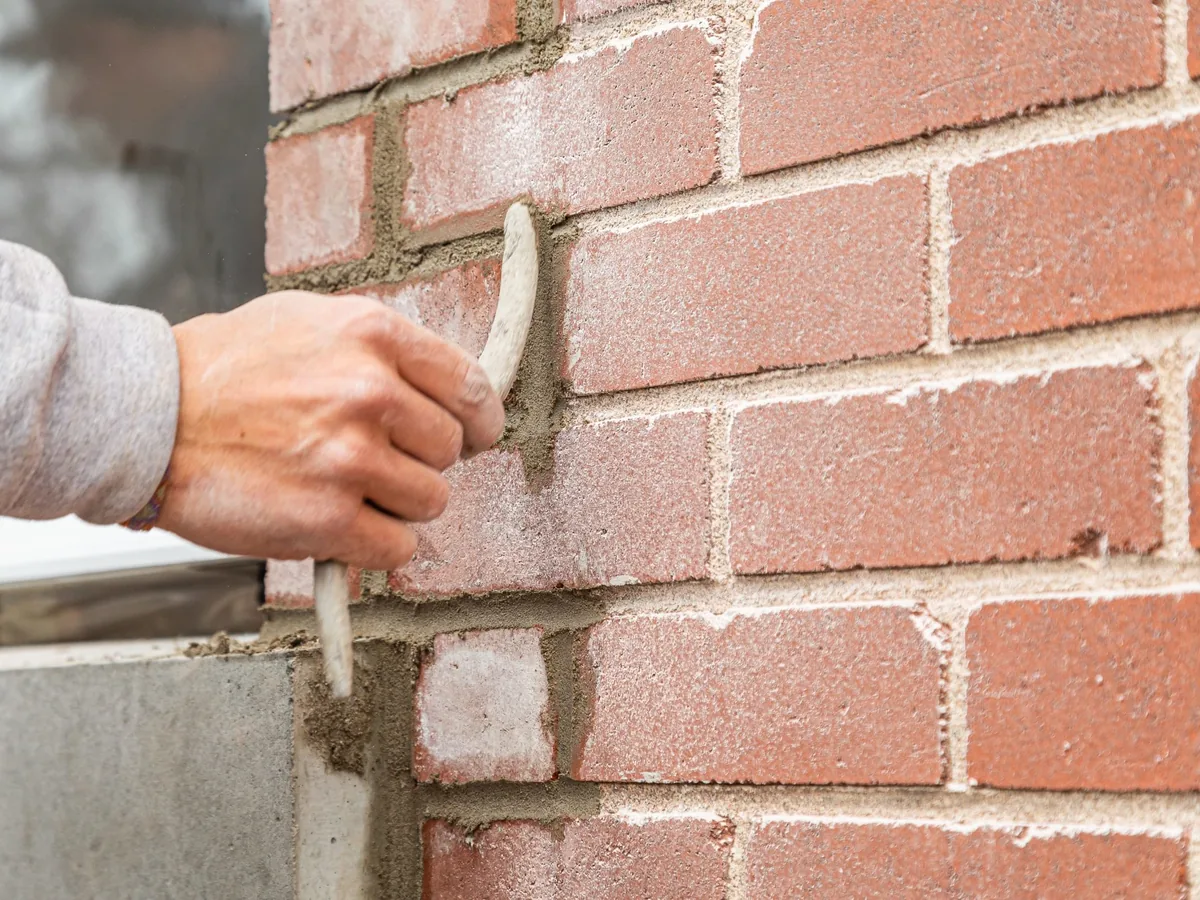
Brick Pointing
Brick pointing for houses, garages and chimneys around Pittsburgh. We cut the failed mortar out of the joints and repoint them with mortar matched to the wall.
Learn More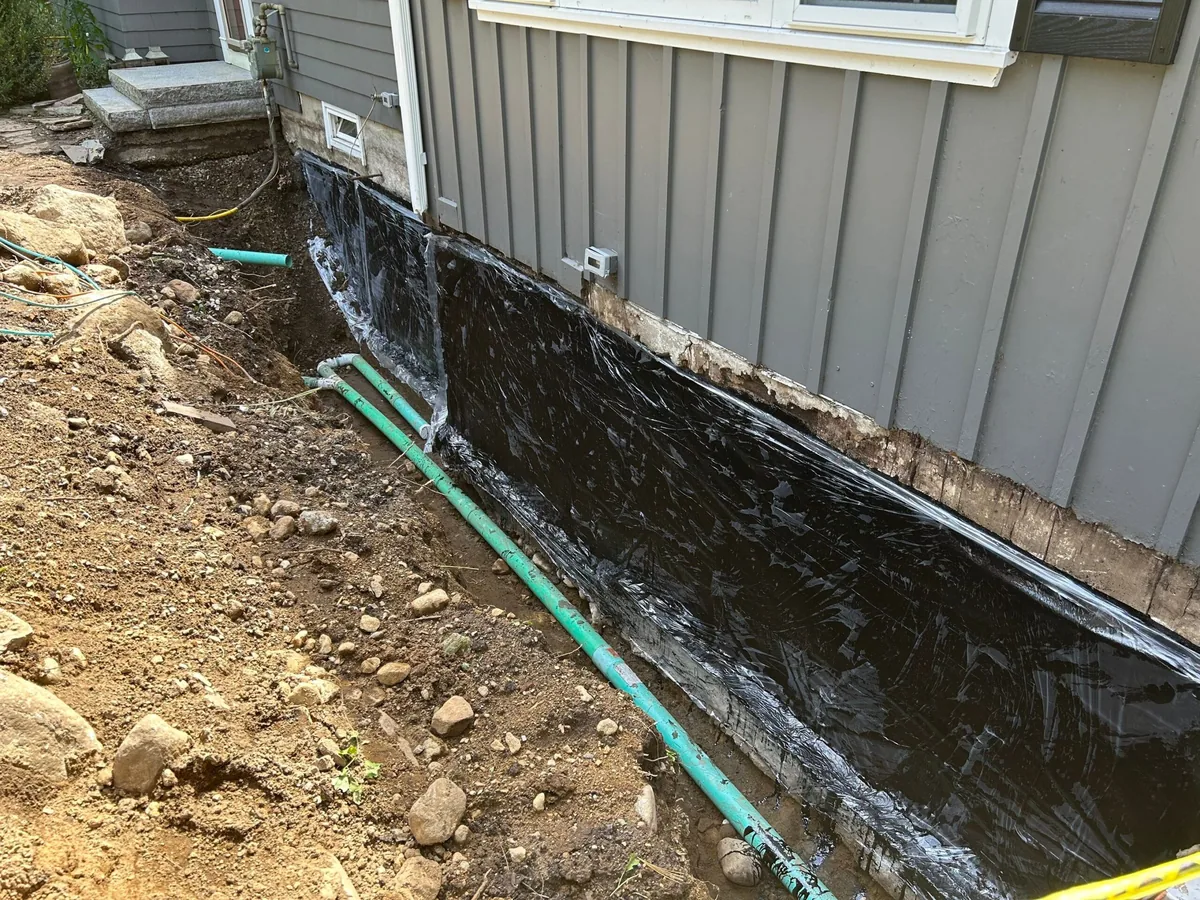
Foundation repair and waterproofing is masonry work, and that is the part we do. We repoint and parge stone, brick and block foundation walls. We repair cracks and rebuild sections of wall that have come apart. Basement waterproofing, the way a mason does it, happens outside. The wall gets dug out, parged, coated and backfilled with stone.
Most of this work is on old walls. Nearly half the houses in the city were built in 1939 or earlier. The median Pittsburgh home dates to 1942. We do demolition too, so the breaking out and digging come from the same masonry company that rebuilds the wall.
Tell us about the job. We will call or text you back.
Masonry turns up on nearly every old building, and most have masonry foundations or chimneys. In this city that means stone, brick and block walls under the house. They were built to be repaired, and they usually need it.
Old mortar was lime and sand. Portland cement was not in common use here until the early 20th century. Walls built between 1873 and 1930 can hold pure lime mortar, or a lime and cement mix. Lime mortar is soft on purpose, and it washes out. Water from a leaking downspout leaches it out of the joints fast.
Repointing is cutting bad mortar out of the joints and packing new mortar in. Parging is a coat of mortar troweled over the face of the wall. New mortar has to be softer than the stone or brick around it. A straight portland mix is hard and resists water movement. That pushes the damage into the masonry instead of the joint. The same rule governs our brick pointing above grade.
The simple fixes come first. Preservation guidance for old buildings puts them in order. Slope the grade so rain runs away from the foundation. Carry downspout water well away from the building. Drain the ground around it, and cut down splash-back on the wall. Digging the foundation out, coating it and adding footing drains belongs after those steps.
When the dig is the right answer, the job runs in order. An old walk or slab along the wall gets broken out first with the air jackhammers. That part is our concrete removal work. Then the trench opens along the wall with the excavator, down to the footing.
The wall is cleaned, parged and coated on the outside face. Building science guidance calls for free draining backfill, or a drainage board. That layer carries water down to a perimeter drain outside the footing, wrapped in filter fabric. We backfill with stone, slope the ground away and leave the site clean. Interior drainage systems and sump pumps are other companies' work.
A crack tells you something, but not the whole story. A long horizontal crack in a block wall usually points to pressure outside it. Wet soil pushes in and the wall bends. A stair-step crack follows the mortar joints. That pattern can come from settlement under part of the wall, from freeze and thaw, or from other movement.
When a wall is bowing, or the house is settling, a structural engineer should look at it first. Piers, underpinning, wall anchors and carbon fiber are other companies' work. We do the masonry and the exterior waterproofing the repair calls for. That often means taking a bad section down and building it back.
This end of Pennsylvania has one more cause of cracks. PA DEP calls mine subsidence the movement of the ground surface when old coal or clay mines collapse. Damage from it is usually not covered by a homeowner's insurance policy. The state sells mine subsidence insurance and keeps a map you can search by address. Millions of structures in Pennsylvania sit over old, abandoned mines.
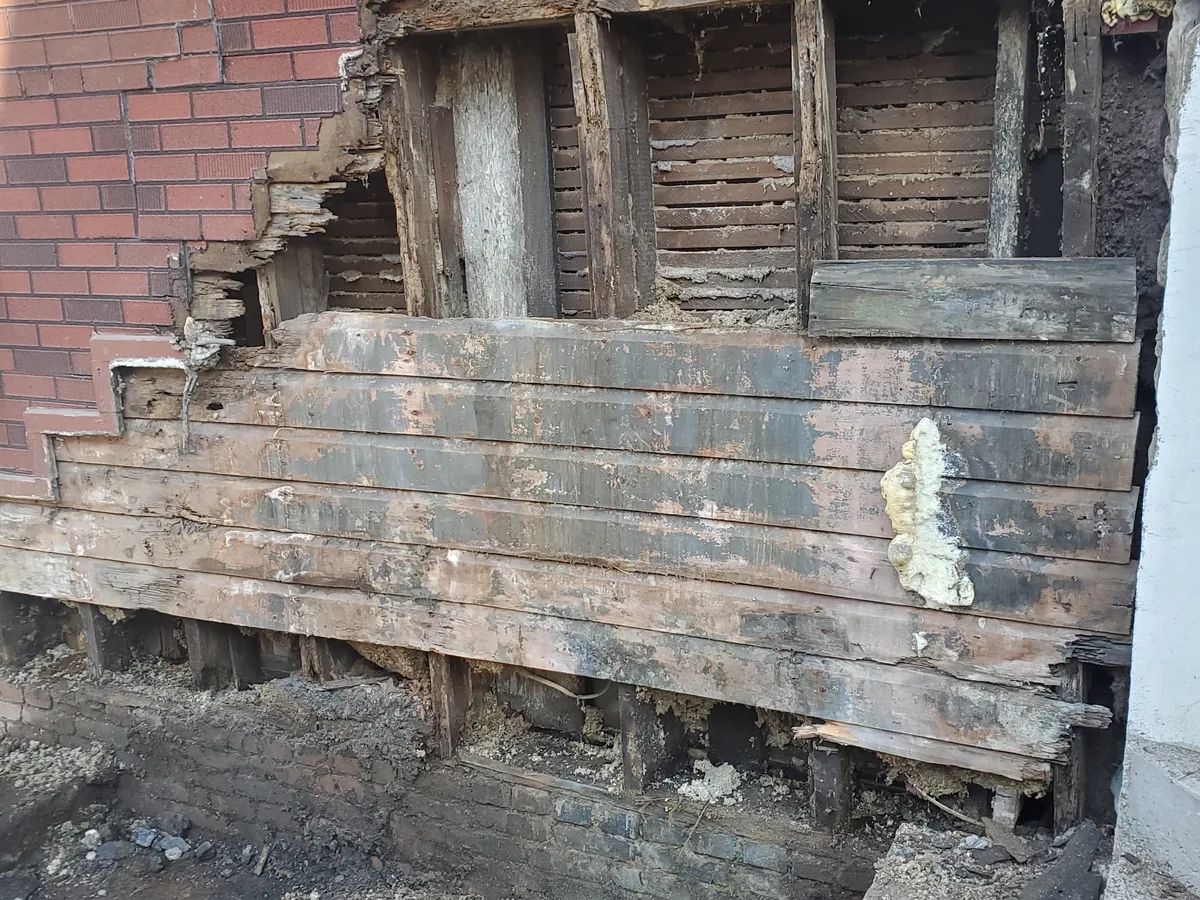
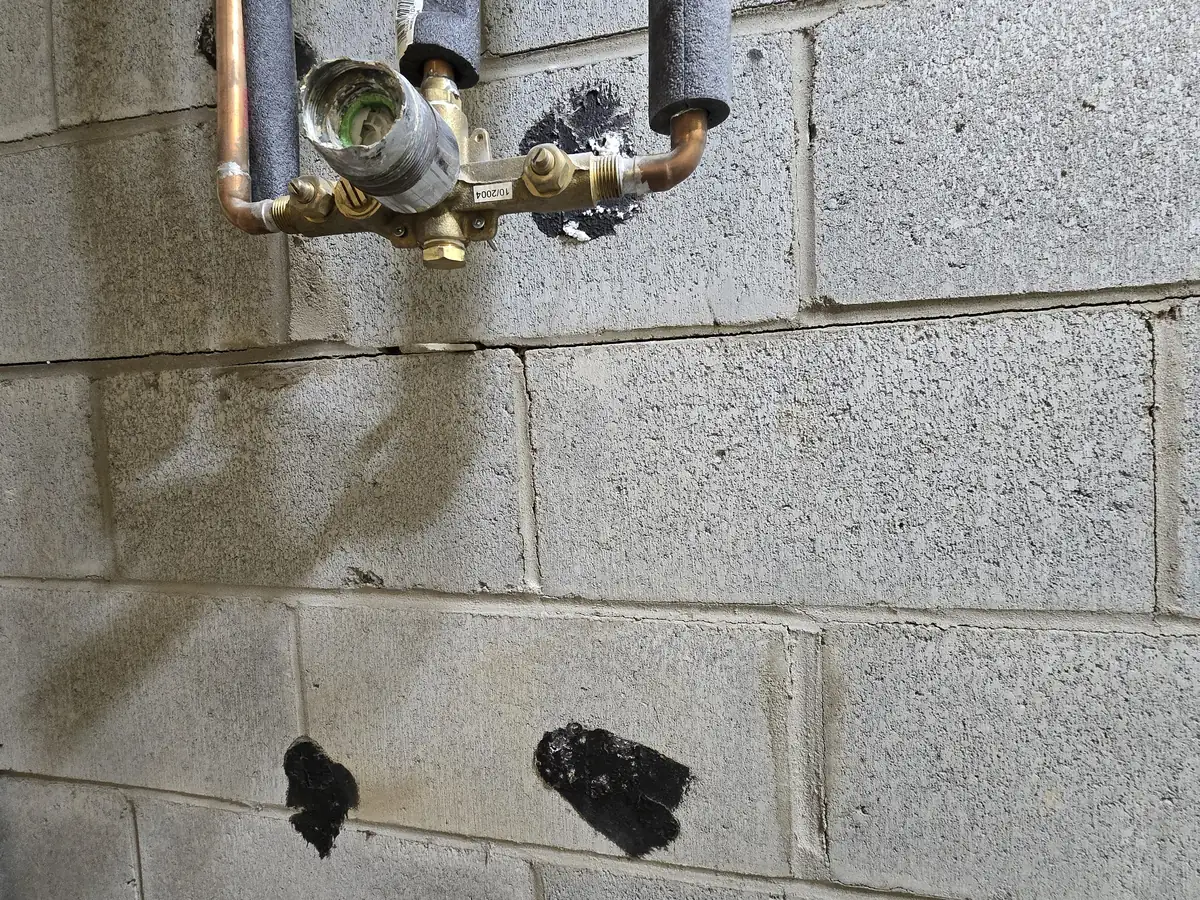
We look at the job and give you a price before any work starts, across Pittsburgh, the South Hills, the eastern suburbs and about 40 miles around.
(412) 720-1866From the first call to a clean site at the end, here is how it goes.
Call or text (412) 720-1866, or send the form. Tell us what is coming down and where it sits.
We come out and go over what is being removed, what it is built of and the access. You get a price before any work starts.
We go over what your municipality requires and who handles each step. Utility shutoffs, One Call marking and any asbestos survey happen before demolition starts.
The teardown or the masonry repair gets done. We keep you posted during the job and handle added scope as it comes up.
Construction and demolition debris is loaded out and hauled away. On a teardown the lot can be graded, topsoiled and seeded.
Common questions about foundation repair across Pittsburgh, the South Hills, the eastern suburbs and about 40 miles around. If yours is not here, call and ask.
Brick pointing for houses, garages and chimneys around Pittsburgh. We cut the failed mortar out of the joints and repoint them with mortar matched to the wall.
Learn More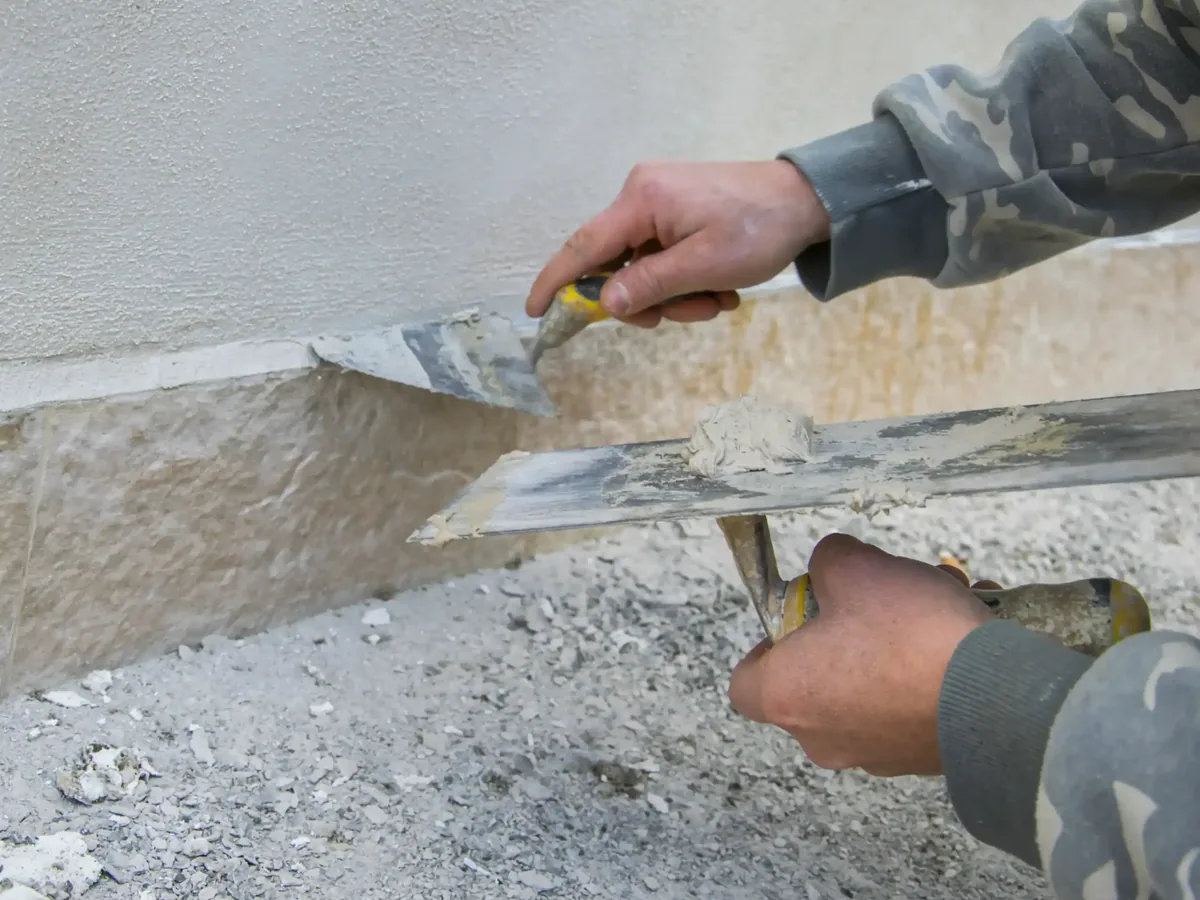
We repair traditional cement stucco on houses and small commercial buildings around Pittsburgh. That covers patching cracks and hollow spots, re-stuccoing a wall that is past patching, and parging block and stone.
Learn More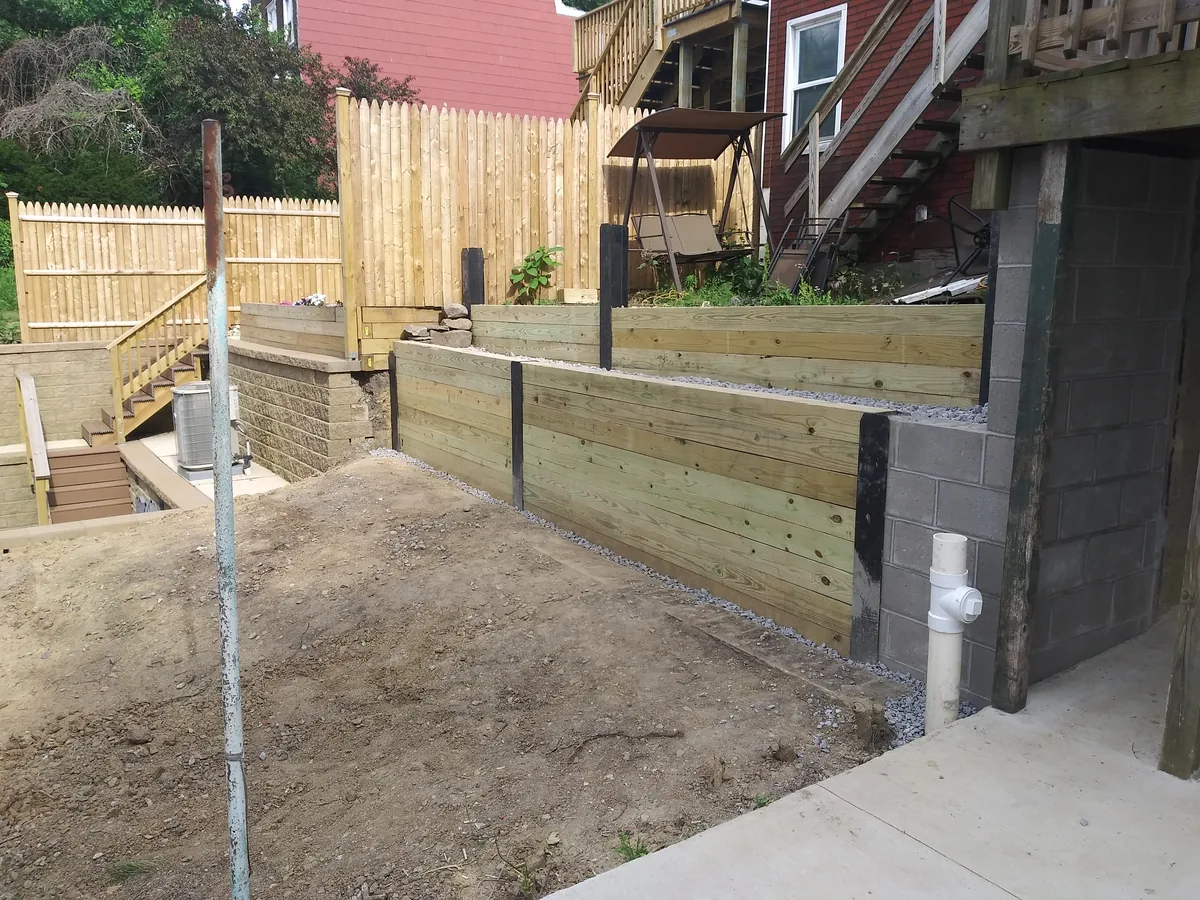
We build and rebuild retaining walls in block, brick, stone, poured concrete and timber, including railroad ties. When a wall has failed, the tear out and the rebuild stay with one company.
Learn MoreDemolition is the main line of work at Davis Demolition and Masonry. Houses, garages, sheds, interior gut outs, concrete and commercial interiors are the everyday jobs.
We hold the City of Pittsburgh general contractor license the city requires for demolition permits. We are an EPA Lead-Safe Certified Firm and a registered Pennsylvania home improvement contractor.
A building background sits behind the demolition work. On an interior job that decides what comes out and what gets left standing.
A failed wall or chimney can come down and go back up with the same company. Debris leaves with us, and the site is left clean at the end.
Tell us what is coming down, what it is built of and where it sits. Call or text (412) 720-1866, or send the form with what you need taken down.
Tell us about the job. We will call or text you back.